
1. Vintage China Dinnerware Sets
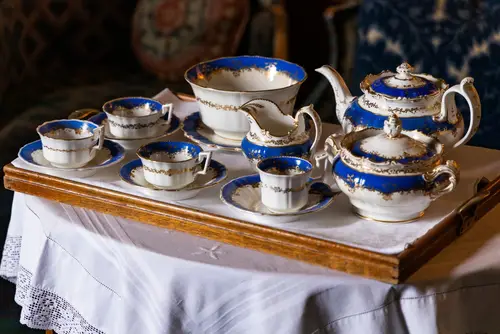
A single teacup from a vintage china pattern might be charming, but collectors usually want the whole table. Full dinnerware sets—especially from companies like Royal Doulton or Wedgwood—typically include dinner plates, salad plates, bowls, cups, and saucers in a matching design. When those pieces stay together, they tell a complete story of how the set was originally meant to be used. That completeness is exactly what serious buyers are willing to pay for.
Missing pieces can drop the value dramatically because replacements are often hard to track down. Many vintage patterns were produced for only a few years before being discontinued. Collectors often search for intact service for eight or twelve rather than piecing together a set one plate at a time. As a result, a full, undamaged set tends to command a much higher price than the same pieces sold individually.
2. Encyclopedia Sets
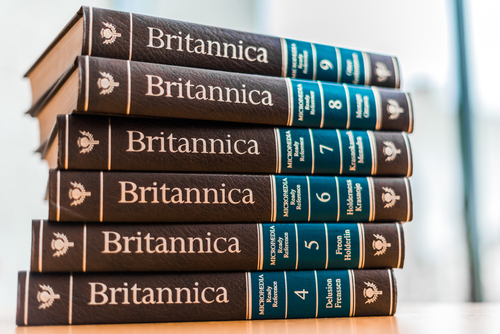
Old encyclopedias aren’t usually worth much on their own, but a complete run can be a different story. Classic sets like early editions of Encyclopaedia Britannica were published in multiple volumes designed to function as one unified reference library. When all volumes are present, the set reflects the way it was originally printed and sold. That historical completeness is part of its appeal.
Collectors and historians often want every volume because information was distributed across the series. Missing even one book leaves a gap in the alphabetical range or subject coverage. Libraries and collectors value intact sets because they represent a complete snapshot of knowledge from a specific time period. Incomplete sets, by comparison, tend to sell for a fraction of the price.
3. Vintage Board Games

A classic board game might look great on a shelf, but collectors immediately check whether all the pieces are still inside. Games like Monopoly or Clue originally came with a long list of components—tokens, cards, dice, money, boards, and instructions. If even a few pieces are missing, the game is no longer playable as intended. That hurts its desirability.
Vintage game collectors pay attention to surprisingly small details. The correct number of property cards or the original metal tokens can make a big difference in value. Early editions are especially prized when everything from the box insert to the rulebook is intact. A complete set essentially preserves the exact experience players would have had decades ago.
4. Trading Card Sets
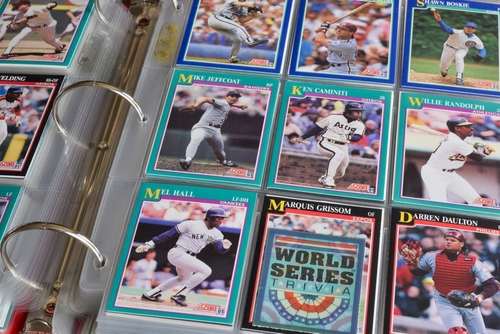
Individual trading cards can be valuable, but many collectors chase full sets. For example, assembling the entire 1952 run of Major League Baseball cards produced by Topps is far more significant than owning random singles. A complete set shows the full lineup of players and the design of the series as it was originally released. That sense of completeness adds historical and collector value.
Completing a vintage card set can take years because some cards are much rarer than others. Condition also matters, since collectors prefer consistent quality across the set. A near-complete set with one missing card can be dramatically less valuable than a finished one. Once the final card is added, the set often becomes far more desirable to buyers.
5. Silver Flatware Sets
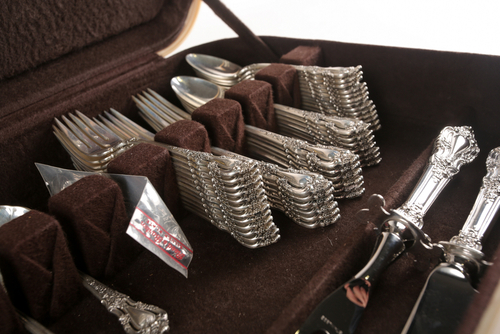
Antique silverware becomes far more appealing when the entire service survives together. Brands such as Gorham and Reed & Barton produced coordinated flatware patterns meant for full place settings. A typical service might include forks, knives, teaspoons, serving spoons, and specialty utensils. When they’re all present, the set reflects the original craftsmanship and design.
Collectors and antique dealers often evaluate flatware by the number of complete place settings. A partial set may still have value for its silver content, but it loses much of its collectible appeal. Matching patterns can be difficult to replace because many were discontinued decades ago. That makes intact sets especially attractive to buyers who want consistency at the table.
6. Vintage Pyrex Mixing Bowl Sets
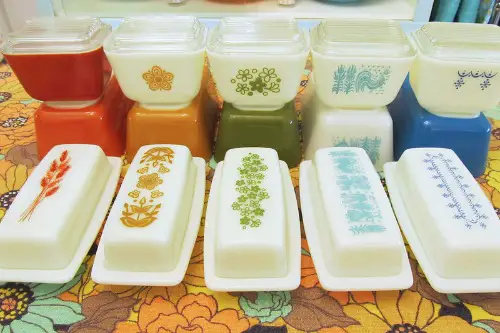
Colorful mixing bowls from Pyrex are a staple of mid-century kitchen collectibles. Many of the most popular designs—like the nesting bowl sets produced in the 1940s through the 1970s—were sold in graduated sizes meant to stack together. Each bowl fits neatly inside the next, creating a complete visual set. When all the pieces are present, the design and function make perfect sense.
Collectors tend to value these sets most when every size is included. The smallest bowl is often the one that goes missing after years of use. Without it, the nesting effect and original packaging concept are lost. That’s why complete four-piece or five-piece sets typically sell for significantly more than individual bowls.
7. Vintage Luggage Sets
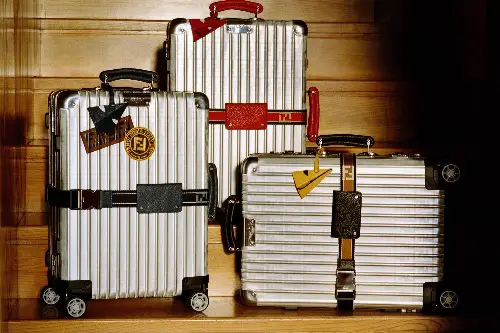
Matching luggage sets from mid-century travel brands were designed to work together visually and practically. Companies like Samsonite produced coordinated sets that included train cases, suitcases, and garment bags. The idea was that travelers could carry a stylish, matching collection on trips. Seeing all the pieces together today gives collectors a glimpse of that era’s travel culture.
When pieces are separated, the set loses much of its charm. A single suitcase might still be useful, but collectors love the coordinated look of the full group. Complete sets are also harder to find because pieces were often lost or damaged over time. That rarity helps intact collections command higher prices.
8. Vintage Book Series
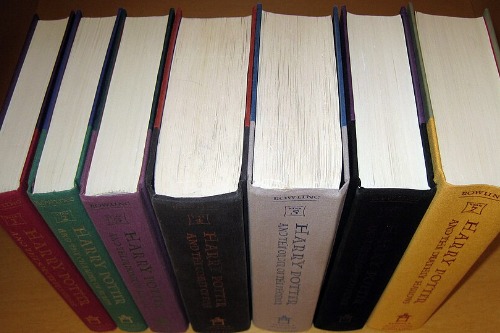
Book collectors usually prefer entire series rather than isolated volumes. Classic works like The Lord of the Rings by J. R. R. Tolkien were published as multi-volume stories that are meant to be read in sequence. Owning the full set preserves the narrative exactly as it was intended. Matching editions also look far better on a shelf.
Incomplete series can frustrate collectors because they break the continuity. First editions or early printings are especially valuable when all volumes are present. Consistent dust jackets, publishers, and printings add to the appeal. A full, well-preserved set often sells for significantly more than the same books purchased separately.
9. Vintage Camera Lens Kits
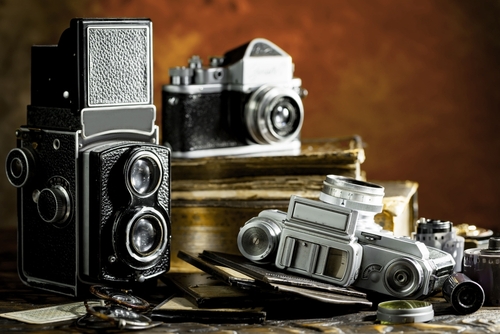
Some classic film cameras were sold as part of a complete photography kit. Systems built around brands like Nikon or Canon often included multiple lenses, a body, and accessories designed to work together. When collectors find the entire kit intact, it reflects how photographers originally bought and used the equipment. That authenticity adds value.
Individual lenses may still have worth, but the complete package is much more appealing. Original cases, caps, and manuals can make the set feel like a time capsule from the era of film photography. For collectors, that sense of completeness matters just as much as the equipment itself. A full kit can therefore sell for considerably more than its parts.
10. Vintage Action Figure Lines

Action figures from the late 20th century often came as part of larger toy lines. For example, characters from Star Wars were produced in extensive series by Kenner during the late 1970s and 1980s. Collectors frequently aim to assemble every character released in a particular wave or year. Completing the lineup gives the collection historical context.
Missing figures can make a set feel unfinished. Some characters were produced in smaller quantities and are much harder to find. That scarcity means completing the series can take significant effort and expense. Once the full lineup is assembled, the collection often becomes far more valuable.
11. Vintage Train Sets
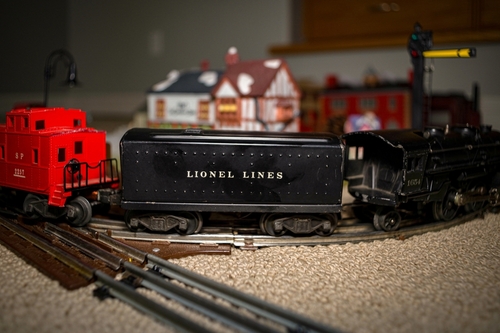
Model trains were typically sold as coordinated systems rather than single pieces. Brands like Lionel produced sets that included a locomotive, several railcars, track sections, and a power transformer. When all of those parts remain together, collectors can recreate the original display or layout. That makes the set much more desirable.
If key pieces are missing—especially the locomotive or transformer—the set loses much of its functionality. Replacement parts can be difficult or expensive to locate. Collectors therefore place a premium on complete boxed sets with all original components. The packaging itself can also increase the value when it survives.
12. Vintage Glassware Sets
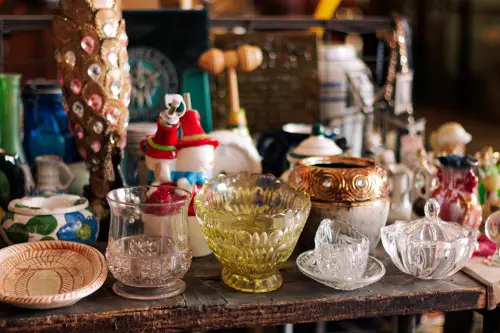
Matching glassware sets were once a staple of mid-century entertaining. Companies like Libbey produced coordinated collections of tumblers, cocktail glasses, and pitchers in the same pattern. These were designed to be used together when hosting guests. Seeing the full set today recreates that classic entertaining style.
Individual glasses are fairly common, but a complete service is harder to find. Over time, pieces break or disappear, leaving sets incomplete. Collectors and vintage enthusiasts often pay more for intact groups that still include every original piece. The visual consistency and historical authenticity make the full set much more appealing.
This post Vintage Items That Only Gain Value When the Set Is Complete was first published on Greenhouse Black.
