
1. Housing is more expensive and harder to opt out of
For much of the 20th century, a modest home in a modest town was within reach for a single income. Today, housing costs have outpaced wage growth in many regions, even far from major cities. Zoning rules often restrict small homes, duplexes, or accessory dwelling units that once made low-cost living easier. Renting isn’t a simple fallback either, since rents track the same pressures as home prices.
This matters because housing is the biggest line item in most budgets. When shelter absorbs so much income, people have less freedom to work fewer hours or choose lower-paying but meaningful jobs. Downsizing or relocating sounds simple, but local regulations and limited supply make it complicated in practice. Simple living becomes less about preference and more about navigating a constrained system.
2. Healthcare is no longer something you can ignore

In earlier decades, many people interacted with the healthcare system only occasionally. Now, insurance networks, deductibles, surprise billing, and employer-based coverage shape job and life decisions. Even healthy people have to think carefully about coverage to avoid financial risk. Medical debt remains a leading cause of financial stress in the U.S.
This makes simple living harder because opting for less work or self-employment can mean losing affordable care. People stay in jobs they don’t like to keep insurance, a phenomenon often called “job lock.” Managing healthcare becomes a cognitive and administrative burden, not a background concern. A simpler life requires more paperwork than it used to.
3. Education and student debt follow you for decades

College was once a relatively contained expense, even at public institutions. Today, tuition has risen significantly, and student loans often linger well into middle age. These debts affect credit, housing options, and career flexibility. They also shape decisions long after graduation.
The reason this complicates simple living is that debt reduces margin for error. People with monthly loan payments can’t easily downshift their income or take long breaks. Choices like moving to a cheaper area or starting a small business become riskier. Simplicity is harder when the past keeps billing the present.
4. Everyday life is increasingly subscription-based

Many basic tools now require ongoing payments, from software to entertainment to home security. Even cars, appliances, and phones are tied to apps and services that didn’t exist before. Canceling everything takes time, attention, and persistence. Forgetting to cancel means paying indefinitely.
This matters because simple living depends on clarity and control. Subscriptions blur the true cost of living and quietly raise baseline expenses. Managing them adds another layer of mental overhead. Instead of owning fewer things outright, people manage a web of recurring obligations.
5. Social comparison is constant and amplified
Before social media, comparison was mostly limited to neighbors and coworkers. Now, curated images of lifestyles, homes, and vacations are everywhere. These images often reflect wealth, sponsorships, or debt rather than everyday reality. Still, they influence what feels “normal.”
This makes simple living harder because contentment is relative. Choosing less can feel like falling behind, even when needs are met. People spend more to avoid social friction or perceived inadequacy. Simplicity requires resisting a cultural current that runs 24/7.
6. Time poverty is built into modern work life

Work hours haven’t disappeared, but expectations around availability have expanded. Smartphones and email blur the boundary between work and personal time. Commutes in many metro areas have grown longer as housing spreads outward. Even scheduling basic appointments can feel like a project.
Simple living requires time, not just money. Cooking, repairing, resting, and maintaining relationships all take unbroken attention. When time is fragmented, convenience wins by default. A busier baseline makes simpler choices feel harder than they used to be.
7. Childcare has become a major economic decision

Childcare costs were once more commonly absorbed by extended families or single-income households. Today, professional childcare is often necessary and expensive. Availability can be limited, with long waitlists in many areas. Parents plan careers around childcare logistics.
This affects simple living because families lose flexibility. Working less may not reduce childcare costs enough to matter, or may eliminate a spot entirely. Parents often have to optimize income rather than lifestyle. Simplicity becomes constrained by systems outside the home.
8. The food environment favors complexity and speed

Grocery stores are larger, more processed, and more confusing than in the past. Many neighborhoods lack easy access to fresh food, while fast food is everywhere. Cooking from scratch requires planning, equipment, and time. Nutrition advice also changes frequently, adding uncertainty.
Simple eating sounds easy, but the environment pushes in the opposite direction. Convenience foods are designed to save time at the expense of health and money. Choosing basic, whole foods takes intentional effort. Simplicity now requires swimming upstream.
9. Bureaucracy has crept into everyday life

Routine tasks like taxes, licensing, insurance claims, and benefits applications are more complex than they once were. Many systems are digital but not necessarily user-friendly. Errors are common and often costly to fix. Help can be hard to reach when something goes wrong.
This matters because simple living depends on low friction. Administrative burden consumes energy that could go toward meaningful pursuits. People spend hours managing systems that exist to manage them. Life feels heavier when paperwork multiplies.
10. Local “third places” have declined
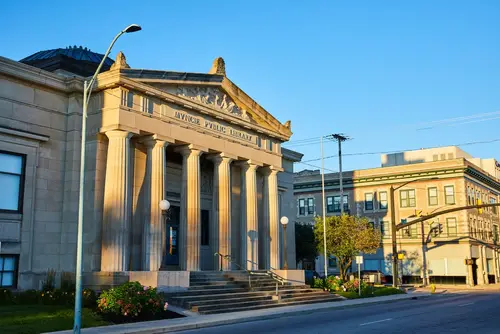
Third places are informal public spaces like cafes, libraries, and community centers. Many have closed or become more commercial and less welcoming. Others require spending money to linger. The result is fewer low-cost places to simply be.
Simple living is supported by community and casual connection. When every outing costs money, staying home becomes the default. Loneliness increases, and social life becomes planned rather than organic. Simplicity is harder without shared spaces that ask nothing in return.
11. Risk has been shifted onto individuals

In the past, pensions, long-term employment, and stronger safety nets reduced personal risk. Today, individuals manage retirement accounts, job transitions, and emergency savings on their own. Mistakes are more consequential and less forgiving. Planning has replaced stability.
This makes simple living harder because simplicity requires trust in the future. When risk is individualized, people hedge by working more and saving aggressively. Fear fills the space where ease might have lived. A simpler life feels dangerous when the margin for error is thin.
This post Why Simple Living Feels Harder Now Than It Used To was first published on Greenhouse Black.
