
1. The Strategic Starting Bid

Auction houses know that setting a low starting bid hooks people fast. It creates the illusion of a bargain, drawing in more bidders who feel they can’t lose at such a “cheap” entry point. But once the competition heats up, the same people who thought they’d get a deal often end up bidding far beyond market value. This strategy works because it taps into our instinct to “win” rather than to save.
The psychology here is powerful—once you’ve placed an opening bid, you’ve mentally committed to the item. Each new bid from someone else feels like a challenge rather than just a price increase. Auctioneers are well aware of this and deliberately keep the early numbers low to build emotional investment. By the time the price reaches its true worth, bidders are too deep to back out gracefully.
2. The Auctioneer’s Rhythm and Speed

A skilled auctioneer’s chant isn’t just for show—it’s meant to keep bidders from thinking too much. The rapid-fire rhythm creates urgency, making people feel they need to act immediately or lose out. Studies in behavioral economics show that faster speech patterns reduce critical thinking time, which can lead to impulsive decisions. The energy in the room becomes contagious, and rational budgeting flies out the window.
That’s why professional auctioneers train extensively to control pacing, tone, and pauses. A well-timed “going once, going twice…” gives just enough suspense to push someone over the edge. The tempo isn’t random—it’s calibrated to maintain excitement without letting the crowd’s adrenaline drop. In short, they’re orchestrating your sense of urgency like a conductor with an orchestra.
3. The Shill Bidder Tactic
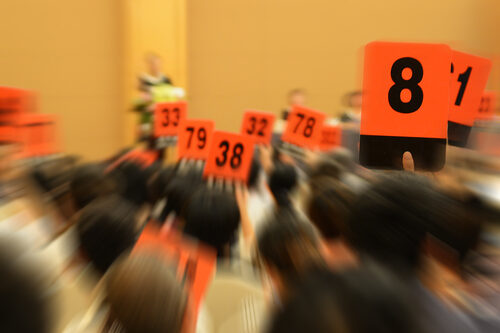
Though officially frowned upon, shill bidding—where someone bids only to drive up prices—is a long-standing trick in the auction world. It creates fake competition and convinces real buyers that an item is more desirable than it actually is. Even if it’s not illegal in every jurisdiction, it’s certainly unethical, yet it still happens both online and in-person. The result? Genuine buyers overpay under the illusion of high demand.
Auction houses may not always know who’s behind a shill, but they benefit from the inflated final sale regardless. The presence of a few “ghost” bidders can push emotional buyers into spending thousands more. It preys on fear of missing out (FOMO)—if others seem eager to pay more, it must be worth it, right? By the time bidders realize the manipulation, it’s too late.
4. The Prestige Effect

Auction houses like Sotheby’s and Christie’s trade heavily on their reputation. The grandeur of the venue, the pedigree of the brand, and even the champagne served all feed into the perception that every item is rare and worth more. Buyers often conflate prestige with quality, assuming that if it’s being sold there, it must be valuable. This “halo effect” nudges them to accept higher prices without question.
In reality, many items could be purchased privately for far less. But the psychological impact of bidding in a world-famous hall surrounded by wealth and glamour shifts your internal price anchor. You start comparing your bids to what others might pay, not what the object is actually worth. Prestige becomes part of the product—and it’s very expensive packaging.
5. The Estimate Anchoring Trick

Auction catalogs often include “estimated values” that subtly steer buyers’ expectations. Even if the auctioneer doesn’t emphasize it, those numbers act as anchors in your mind. If the estimate says $10,000–$15,000, a $9,000 bid suddenly feels like a bargain—even if the item’s real market value is half that. Anchoring is one of the most powerful pricing biases humans fall for.
Auction houses use these estimates to set psychological benchmarks rather than realistic ones. They’ll often list conservative low estimates to spark interest, then let bidding momentum push far past the “expected” range. The final price feels validated simply because it lands within or just above the estimate window. It’s a subtle way of normalizing overpayment.
6. The “One More Bid” Urge

Auctioneers are masters at making you think one more bid is all it’ll take. When they say, “Don’t lose it for just another hundred,” they’re reframing the decision as a small emotional trade-off instead of a big financial one. It shifts your focus from total cost to incremental cost, which makes overspending feel trivial in the moment. That’s how people end up blowing their budgets without realizing it.
This is rooted in what psychologists call “loss aversion.” Humans hate losing more than we enjoy gaining, and auctioneers exploit that perfectly. The thought of walking away after coming so close feels worse than paying more than you planned. The entire bidding process is designed to make “just one more” sound like no big deal.
7. The Carefully Managed Lighting and Layout

Auction houses don’t leave the physical setup to chance. Lighting, stage design, and even seating arrangements are crafted to focus attention and heighten emotional response. Brighter lighting on the auctioneer and the object draws your eyes and energy, while soft lighting on the audience minimizes distractions. You’re literally being spotlighted into excitement.
This tactic borrows from retail psychology—environment shapes perception. Just as luxury stores use lighting to make jewelry sparkle, auctions use atmosphere to amplify perceived value. The more immersive the environment, the easier it is to lose track of rational limits. It’s sensory manipulation with a velvet touch.
8. The Pre-Auction Buzz

Auction houses excel at creating hype long before the sale begins. They release glossy catalogs, host preview events, and seed media coverage about record-breaking results. By the time bidders arrive, the sense of exclusivity and anticipation is sky-high. The more people believe they’re part of something momentous, the more freely they spend.
This pre-game marketing serves a clear purpose: emotional priming. It frames the auction as an event, not a transaction, which shifts participants into a different mental state. Rational buyers become competitive collectors. And once your ego is in the mix, prices stop being numbers—they become symbols of status.
9. The “As-Is” Clause

Most auction items are sold “as-is,” meaning you buy it with all faults, declared or not. This lack of consumer protection might seem like a disadvantage, but it actually benefits the house. It adds an element of risk that keeps adrenaline high and logic low. Bidders start rationalizing defects away in the excitement of competition.
Because there’s no refund policy, buyers push themselves harder to “win” something they’ve already justified emotionally. The finality of the sale adds a layer of pressure that encourages reckless bidding. You’re not just fighting others—you’re fighting the clock and your own second thoughts. That tension makes the hammer fall a lot heavier on your wallet.
10. The Emotional Backstory

Auctioneers often sprinkle in sentimental or dramatic stories about an item’s history. Whether it’s “once owned by a duchess” or “discovered in a forgotten attic,” these details transform objects into narratives. That emotional framing boosts perceived value by attaching meaning beyond the material. It’s no longer just an object—it’s a piece of a legend.
This is classic storytelling psychology. When people connect emotionally to an item, they become less price-sensitive and more driven by sentiment. Auction houses know this and hire specialists who can spin a compelling story in seconds. Buyers end up paying for feelings as much as for artifacts.
11. The Lot Order Strategy

The order of items in an auction isn’t random—it’s strategically curated. Early lots often feature mid-tier items designed to warm up the crowd, while high-value pieces appear once bidding energy peaks. This timing ensures that by the time the big-ticket items appear, participants are emotionally and financially primed to spend more. It’s the auction equivalent of pacing a concert setlist.
Auctioneers rely on momentum to carry enthusiasm forward. Once a room gets into the rhythm of bidding, prices naturally escalate. Ending on a dramatic, high-value sale keeps the narrative of success alive for future events. Every lot order is a psychological choreography meant to sustain intensity.
12. The Celebration of “Records”

Every time an auction sets a “new record,” it isn’t just news—it’s marketing. Auction houses proudly announce record-breaking prices because it reinforces the idea that their items are worth more. These headlines attract future bidders who want to be part of that same prestige-driven history. It’s a feedback loop that keeps values inflated.
By publicizing big wins, they normalize overspending as achievement. Buyers start seeing high prices not as cautionary tales but as badges of honor. The narrative shifts from “someone overpaid” to “someone made history.” It’s brilliant branding that keeps the bidding cycle alive and thriving.
This post 12 Auction House Tricks That Keep Buyers Overpaying was first published on Greenhouse Black.
